
Social Capital: There and Here
- Sep 15, 2015
- 2 min read
The idea of “social capital” has become very significant to me in the course of my work over the past several years. From April 2011 to March 2015, I had the privilege of providing leadership to the work of the Food for the Hungry (www.fh.org) in Cambodia. Over the course of that time, we implemented a program called Five Steps of Hope, which facilitated local village leadership in rural Cambodia in learning how to overcome poverty in their communities. While the program included the provision of technical training on a variety of topics (agriculture, health, savings group formation, etc.), the distinctive of our approach was our highly relational engagement with the community. We spoke of “walking with communities,” and our staff had a consistent presence in these rural Cambodian villages.
As I reflected on the overall thrust of our work, I realized that a core component of that work was the restoration of social capital. One of the legacies of the genocidal Khmer Rouge regime was the thoroughgoing destruction of social capital. Paranoid suspicion led the regime to destroy all forms of social ties other than allegiance to the regime’s “organization.” Such destruction took the form of forced migration, coerced reporting on disloyal activities, and ultimately widespread murder. In many ways, that destruction of trust is the most lasting legacy of the Khmer Rouge reign of terror.
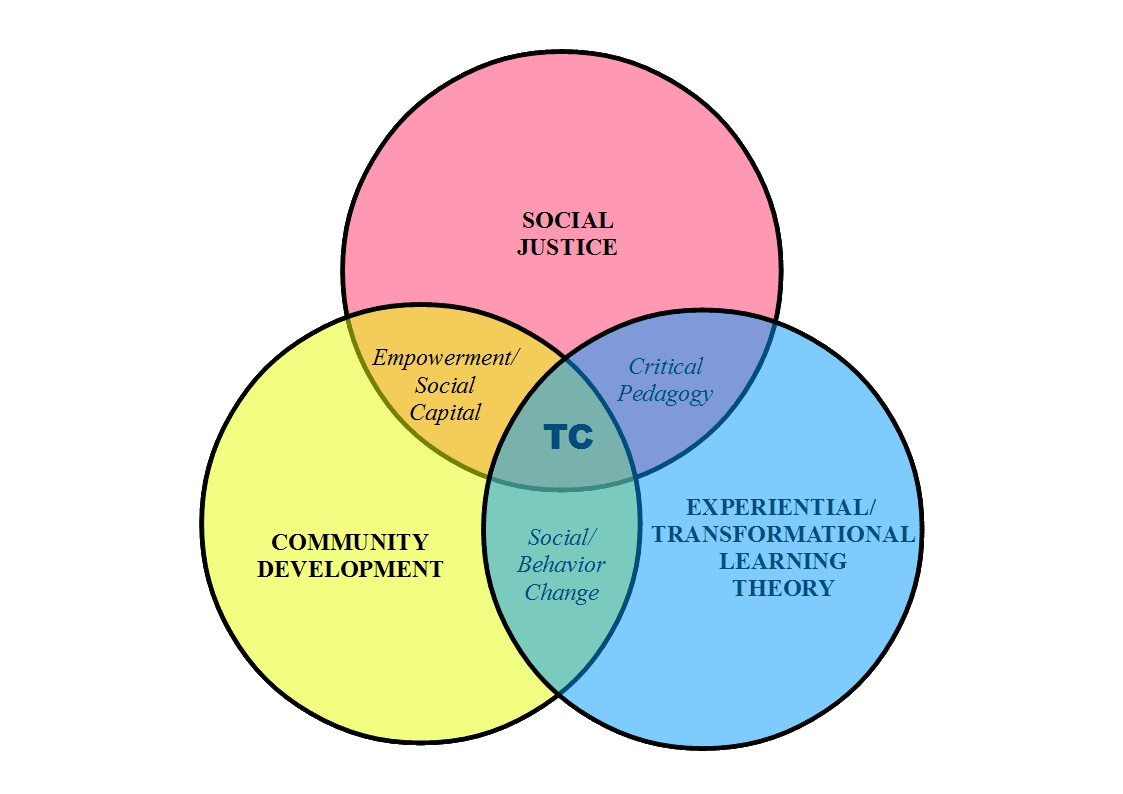
The work of Food for the Hungry, though limited in scale, played a meaningful role in rebuilding those relationships of community and trust in the local villages we work with. Combined with the opportunity to learn new technical skills, this reconstruction of social capital played a key role in the empower of these communities and their leaders as they sought to continue overcoming poverty in their contexts.
In light of this background, I decided to read Robert D. Putnam’s Bowling Alone, which addresses the decline of social capital in the American context. This blog will share some reflections on the book, and the relevance of social capital to the task of “education for empowerment.”
Citation:
Putnam, R. D. (2000). Bowling alone: The collapse and revival of American democracy. New York: Simon & Schuster.


Comments