
ASK Model of Empowerment
- Oct 5, 2015
- 1 min read
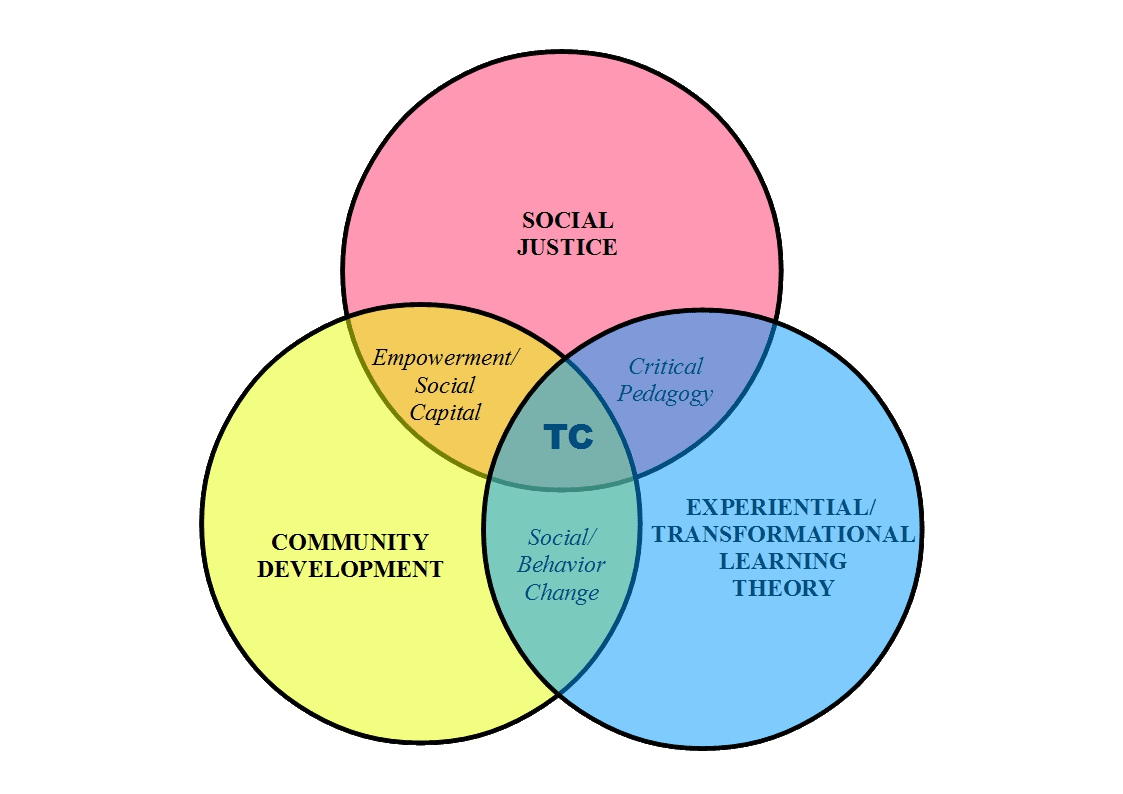
On the "Critical Practice" page in my portfolio, I include a brief description of the "ASK model of empowerment.' In this theoretical model, I define empowerment as the capacity to make effective choices leading to holistic well-being. I then suggest that empowerment is a function of assets (natural, material, and financial), social capital, and knowledge.
In other words, when people have an increasing level of assets, then they will have a greater capacity to make effective choices leading to holistic well-being. When people have increasing levels of social capital, that capacity will increase as well. The same would be true for knowledge - which is why we can speak of "education for empowerment," since the more that people know and understand, the greater capacity that they have to make good choices in their lives.
Now, our ability to expand the assets that people have access to may be limited. (We can just give away money, I suppose, but eventually the money to give away will become scarce!) However, our ability to increase empowerment through expanding social capital and knowledge may be much less limited, and is probably going to be more effective in the long run. This is why, in my work with Food for the Hungry, I sometimes described our work using the acronym SCALE: Social Capital And Learning for Empowerment. By leveraging these two growth areas - social capital and learning - we could contribute significantly to the empowerment of local Cambodian communities.
The topic of Putnam's work, then, is of direct importance to the task of empowering communities and making them truly transformational.


Comments